To ask for a pay rise in Australia, ask before next year's pay budget is set. Ask your manager which month that is. Then hand them one page: what you took on, two results with numbers, and the band for your level. They take it upstairs. Email them the next step and its date that day.
Last updated 18 October 2026. Every source below was checked on 18 October 2026.
You've been doing the lead's job for a while now. You told your manager in your first month that you wanted the promotion. They said June is when you'd be put up, and July is when you'd know. You put your odds at six in ten, then caught yourself making up a number from a few kind words. July came with no decision. The budget had gone elsewhere this cycle, and you'd be first in line at the next one.
A client I coached was told to be thankful they still had a job. It wasn't the first time they'd heard it.
Most people ask for a raise as if the money is sitting in the room, waiting. Usually it was settled weeks earlier, in a budget meeting they weren't in. So the work happens before your one-on-one. Your manager needs a page they can carry upstairs. Below are the seven steps I'd walk a client through, with the prompts to paste into Careersy AI, or into any AI tool with web search on.
| Step | What you do | How you know it's done |
|---|
| 1. Find the date | Ask your manager when next year's pay budget gets set | You have a month written down |
| 2. Know your band | Get the pay band for your level and city | You can say where you sit in it |
| 3. Bring a dated market read | Run one cited research report | Every number has a source and a date |
| 4. Write the one page | Scope, results with numbers, the band, one ask | Your manager could forward it unchanged |
| 5. Ask in the one-on-one | Say three sentences, ending on your number | They name a next step and a date |
| 6. Confirm it in writing | Send a short email the same day | The step and the date are in their inbox |
| 7. Decide: wait or test the market | Weigh the two, if your champion has gone or the scope is capped | You've picked the date you'll decide by |
If your one-on-one is next week, do steps 2, 4 and 5 tonight: get your band, write the page, and practise the three sentences. That's about 20 minutes.
When is a pay rise actually decided?
In most companies, your pay rise is decided in the annual review cycle. The pool of money is set before your one-on-one. Ask outside that cycle and your manager has to find money that isn't there yet.
The unfair part, in my view: managers often do find off-cycle money when they think someone is about to leave. The people who stay put wait for the review.
You can see the cycle in the national numbers. In the June quarter of 2026, only 10% of Australian private-sector jobs recorded a wage change, the lowest share since June 2020. In the September quarter of 2025 it was about half (ABS Wage Price Index, June quarter 2026, released 19 August 2026). The September quarter is the first quarter of the Australian financial year, when many companies' new pay budgets take effect.
Step 1. When does the budget get set?
Ask your manager at your next one-on-one, whatever month it is:
"When does the budget for next year's pay increases get set? When would you need my case so I'm included in it?"
Write the month down. That date is your deadline, and it's earlier than the review. In New Zealand, ask the same question, because the cycle date varies by company.
Who decides whether you get a pay rise?
Your manager makes the case, and someone above them signs it off against the pay band for your level. Your manager can't promise a number they haven't been given. One client's manager was happy to put them forward, but told them the final call wasn't hers. It came down to budget, and whether the business needed the role.
The way I see it, your manager makes the case, and the other people who know your work back it. It works the same way on a job offer. The money isn't coming out of the recruiter's own pocket. There's a band for the role.
Budget and band decide it. Effort and tenure only count once you turn them into something your manager can repeat upstairs. The same client told me they got plenty of recognition, and none of it showed up in their pay.
A promotion often rests on one champion, usually your manager. If that person leaves, the case often leaves with them. The next manager starts from zero.
Step 2. What is the pay band for your level?
Find the band before you name a number, because whoever signs it off checks your ask against it. By hand, open the Hays Salary Guide and one more salary guide, find your role and city, and write down the base range for your level. Then mark where your own base sits in it.
If you can't get to the guides tonight, Careersy AI does the same job. The compensation mode gives you the real Australia and New Zealand pay band for your role and city. It shows you where your pay sits against it, and hands you the script for the conversation. You can start with 10 free messages on us, no card needed, at app.careersy.ai/signup. Choose Compensation & Negotiation and paste this in:
Prompt
I'm a [your role] at [your level] in [your city]. I earn [your base] base plus super. Before you decide my level, ask me what I own today: the team, the systems, the decisions. Then give me the base pay band for my level and city, with its source and date, and tell me where I sit in it. Don't give me any number you can't source.
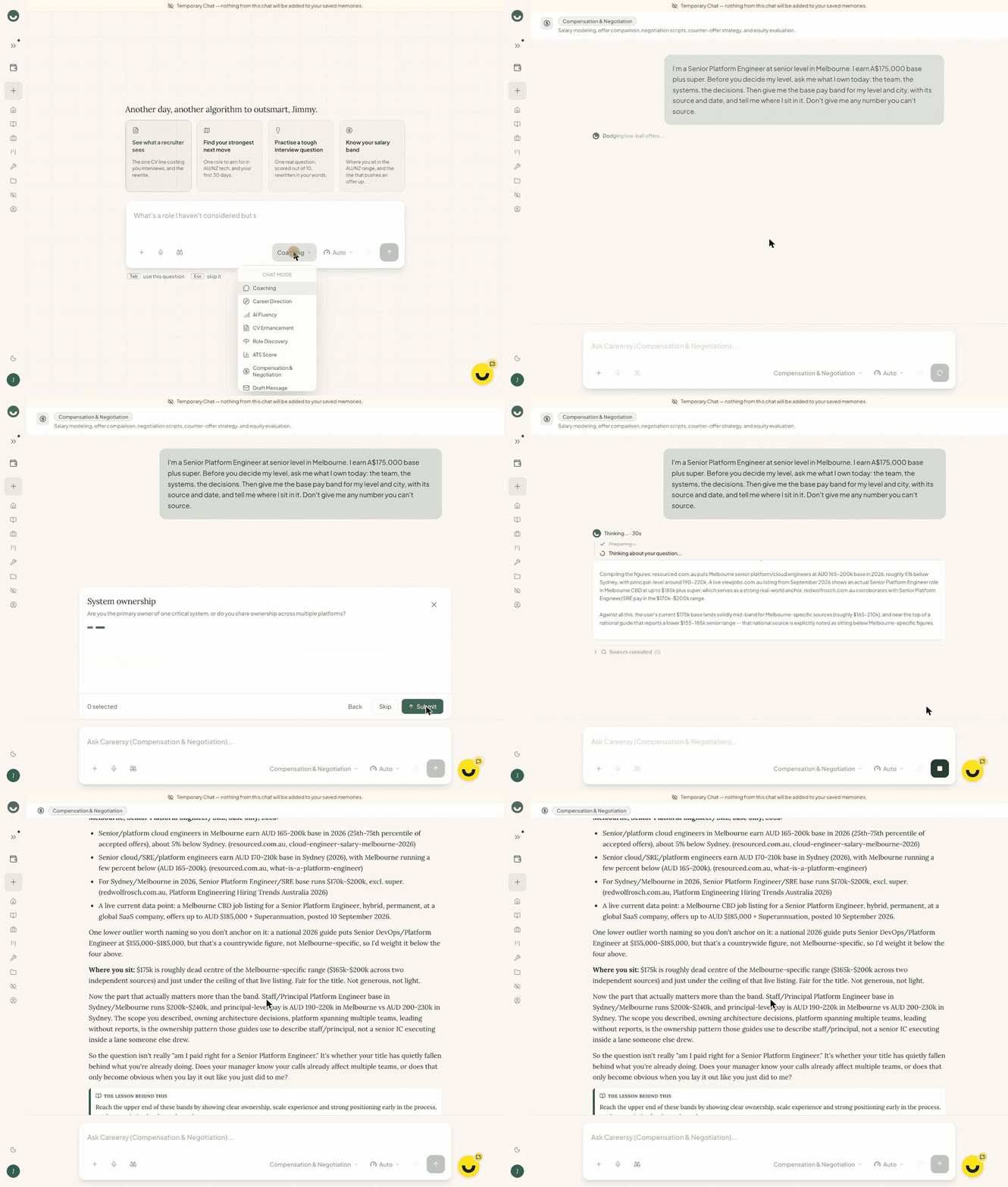 Your prompt tells it to ask what you own before it answers. Say each answer out loud before you type it, because you'll be saying the same things to your manager.
For context, Aon's 2026 study of 500 Australian organisations puts the median actual pay rise in tech at 3.7% for 2026, with 4% expected for 2027 (Aon, 30 September 2026). The Hays Salary Guide FY26/27 has the average increase at 4.0% in Australia and 3.3% in New Zealand (Hays). Those are broad figures. Your band for your level is the number that goes on the page.
Step 3. How do you bring market data your manager can quote?
Whoever signs it off will ask one question about your number: where did it come from? So bring one dated report with sources. In Careersy AI, open a new chat and turn on Deep Research (the binoculars button next to the message box). Then paste this in:
Prompt
Research what a [your role] at [your level] is paid in [your city] right now. Use salary guides and job ads from the last six months. Give me the source and date for every figure, and say plainly where the data is thin. Don't average sources that measure different things, and don't fill a gap with a guess.
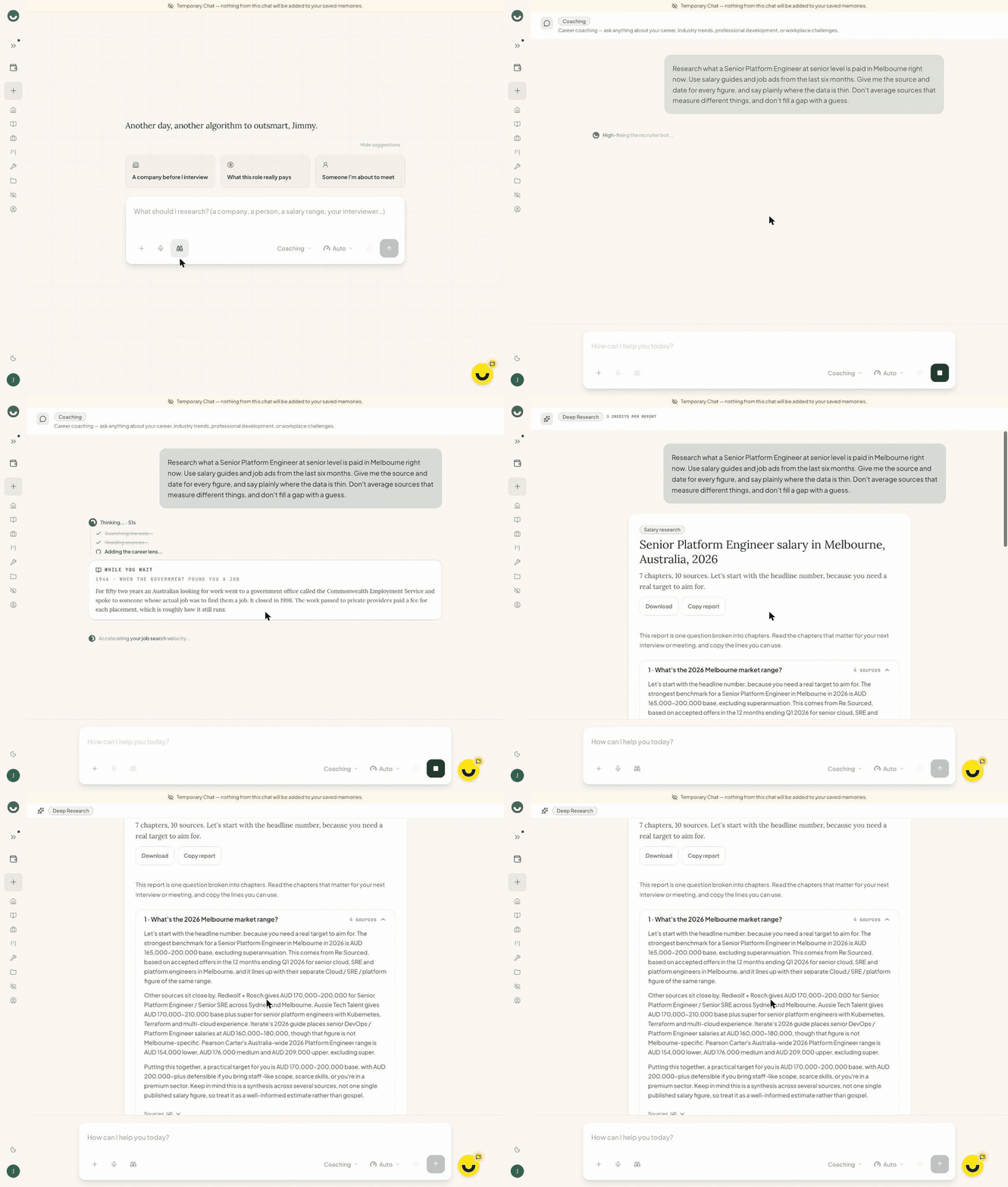 A Deep Research report uses 3 credits on a paid plan, so run it once. The report is saved to your Library, so you can open it again before the meeting. Pull the two figures you'd stand behind and write down where each came from.
Step 4. How do you write the case your manager takes upstairs?
Here's the question I put to the same client before their promotion round: "how much of this promotion conversation are you driving and how much are you bringing to your manager in terms of evidence based on the rubrics that you have?" Answer it with one page your manager could forward without changing a word. If you read how to negotiate a job offer in Australia, you've met the value log. A value log is a running record of your results with numbers. This page is the value log cut down to what the person signing off needs, in this order:
- Scope: what you own now that wasn't in the job you were hired for. Three lines at most.
- Impact: two or three results with a number each: time saved, money saved, incidents down, people led.
- Market: your band from step 2 and one sourced figure from step 3.
- The ask: one number, or one title.
Keep it in your own doc. Lead with scope, because a bigger job is something your manager can argue for upstairs.
If your company publishes level expectations, map each line on the page to one of them.
| What | Your line | Number |
|---|
| Scope I took on since I was hired | | |
| Result 1 | | |
| Result 2 | | |
| Market: your band and one sourced figure | | |
| The ask: one number or one title | | |
Add a third result if you have one. Stop there.
Step 5. What do you say in the one-on-one?
Say three short sentences with the number in the last one, then stop talking. Swap the brackets for your own details:
"I've taken on [your scope in a few words]. Market data for [your level] in [your city] puts it at [the band]. Could we move me to [your number]?"
If the answer is that pay is frozen this cycle, ask for a dated review instead:
"If that's not possible this cycle, could we agree a review in six months, tied to [one named deliverable], and put it in writing?"
A frozen pay pool only freezes the cash. Plenty of what makes a job better doesn't come out of that pool, so ask for one of these in the same conversation:
- Flexibility. A set work-from-home day, or compressed hours.
- Leave. An extra week, or the option to buy extra leave if your employer runs a purchased leave scheme.
- Development. A study or training budget, a course or a conference, plus the time to do it.
- Title. If you're already doing the bigger job, the title that says so. It's the first thing the next recruiter reads.
Pick the one you'd actually use, and pair it with the dated review above. When Robert Half asked 500 Australian hiring managers what they offer when a candidate's number is out of range, flexibility (56%) and development (52%) came up about twice as often as a sign-on bonus (28%) (IT Brief, 24 February 2026). That survey is about new hires, but it shows which levers managers reach for first when the cash is tight.
You'll know it landed if they name a next step and a date, like "I'll take it to [their manager] before the review." If all you get is "let me think about it", ask when you'll hear back, and put that date in your email.
Step 6. How do you confirm it in writing?
Send a short email the same day, because a promise made out loud leaves with the person who made it. Open Draft Message in Careersy AI and paste this in:
Prompt
Draft a short email to my manager after today's one-on-one about my pay. Confirm what we agreed: [the next step], [who takes it forward] and [the date]. Thank them in one line. Keep it under 100 words, plain and friendly. Use only what I've told you, and leave anything I haven't given you as [?].
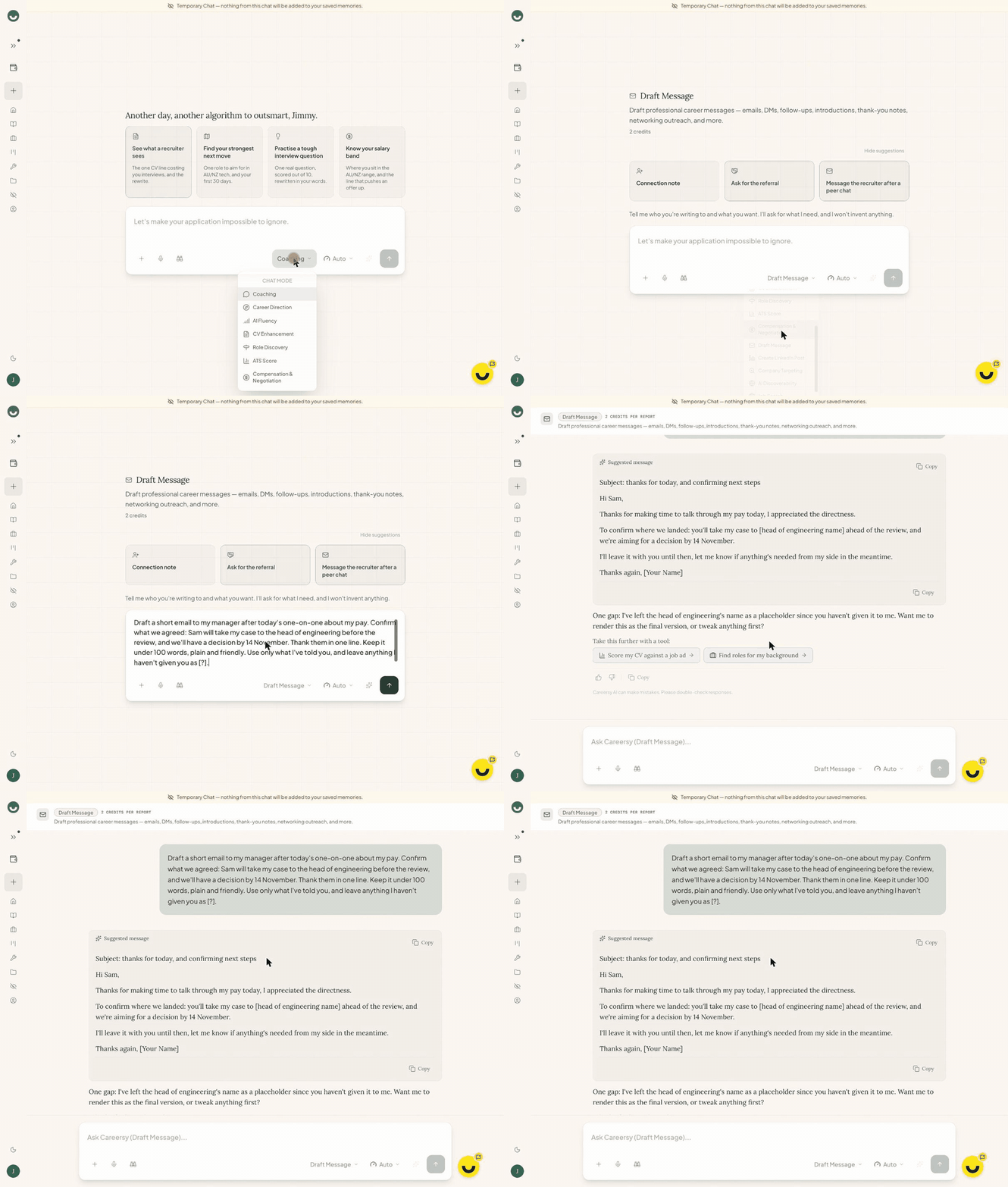 Read it, change anything that doesn't sound like you, and send it yourself.
Step 7. When should you stop asking and test the market?
Another client said it on our first call: "I grow fast and then I hit a ceiling." That's the signal to test the market. The champion has gone, there's no pipeline of work, or the scope is capped. Another cycle won't fix any of those.
A client came to me after joining on promises. The manager who hired her made them, then left. The pipeline she'd been told about wasn't there. Before we talked about the market, I asked her: "What is more important right now in your life? Finding a role that pays that money or finding a role that gives you enjoyment?" Then I told her why I was asking: "Sometimes you can't have both." She said, "I think at this point it's still the money."
Your answer to that, money or the work, decides which roles you'd go after. I said this to another client, in a session about staying too long: "When you stay at a company for long term... [your salary] doesn't keep up with the market because the market is moving, moving, and you stay like slowly going up." And then the part nobody says in the review: "They could have easily adjusted based on market, what are we paying our people, but yeah, obviously no one's going to do that."
In e61 Institute's 2024 analysis, switching jobs in Australia came with pay rises about 9 percentage points larger than the average rise for people who stayed put. That's about $5,700 more for the typical worker. To work out which way to go, open Career Direction and paste this in:
Prompt
Here's my situation: [what changed, for example the manager who backed me left, or the promised scope hasn't arrived]. I earn [your pay] and the band for my level is [the band from step 2]. Ask me one question at a time what matters most to me right now, the money or the work. Then help me decide whether to wait for the next cycle or test the market, and give me a date to decide by.
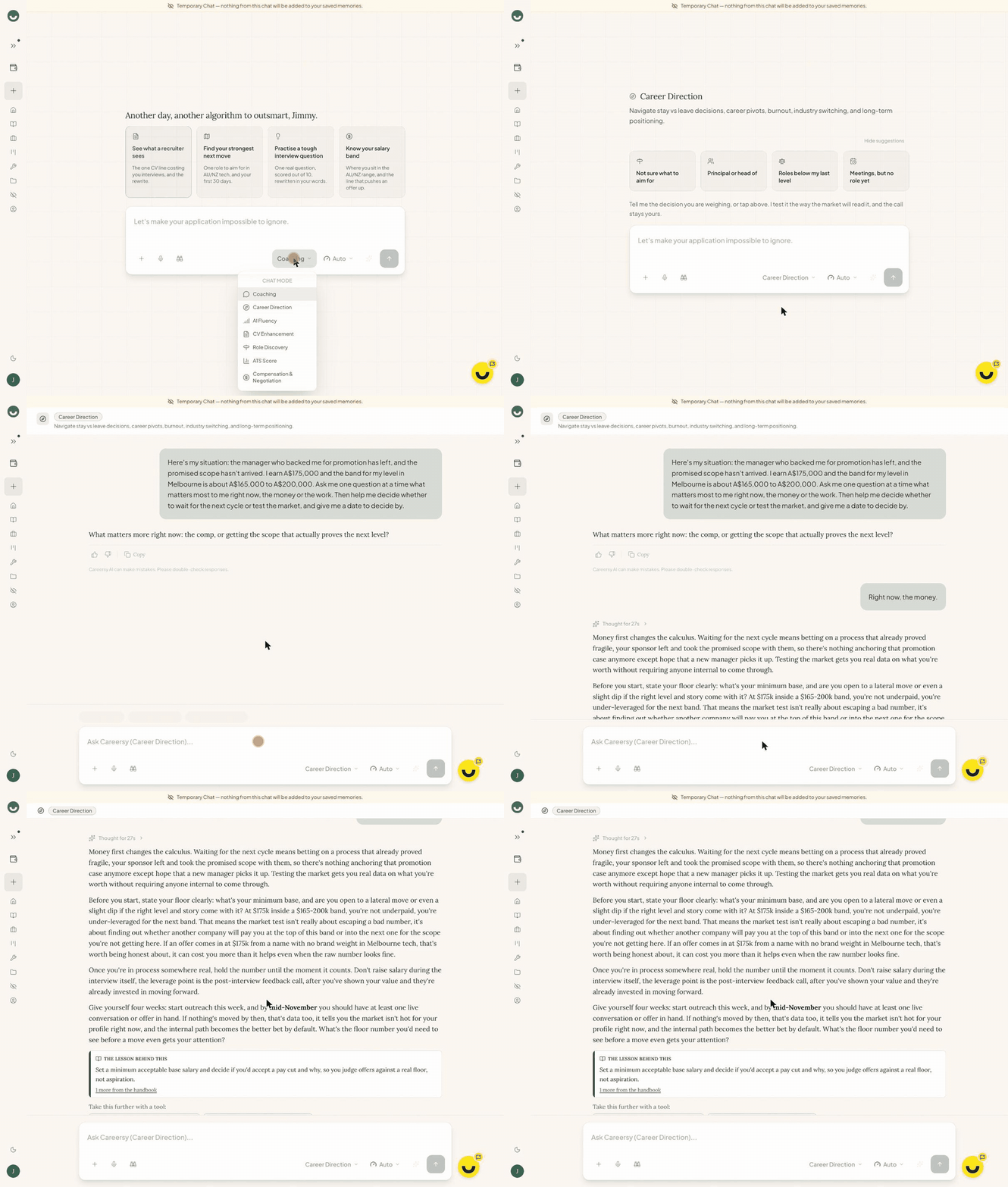 If you decide to look, start with how to answer salary expectations in Australia, because the number you give on the first recruiter call sets the range. Then the 30-day job search plan runs the search itself, and Talk money covers the rest of the money conversation.
Should you take a counter-offer?
Take one only if the reason you wanted to leave has been fixed. A counter is usually about their inconvenience: the cost and disruption of replacing you. Ask yourself why you started looking. If it was the manager, the ceiling, the work, the pay that drifted below market, a counter usually fixes only the last one. My view: a counter taken for the money alone rarely holds, because the reason you started looking is still there on Monday.
How you know it worked
Run these within a week of the one-on-one:
- You have the budget month written down, and it's earlier than the review.
- Your case fits on one page and every result on it has a number.
- Your manager named a next step and a date, and your email confirming both is in their inbox.
- If the answer was no, you have a dated review in writing, or a date you'll decide to look by.
The raise gets argued in a room you're not in. Send the page in with someone who is.
Where this doesn't work
- Pay set by an enterprise agreement or award. The agreement decides the increase, so ask about your classification or level instead.
- Small startups with no review cycle. The founder often decides in any month. Ask when the next budget or funding decision is, and time the page to that.
- Contractors on a day rate. Your rate moves at renewal. Raise it before the extension is signed.
FAQ
When is the best time to ask for a pay rise in Australia?
The best time to ask for a pay rise is before your company sets next year's pay budget, which is earlier than the review itself. Ask your manager when that budget gets set. In the ABS Wage Price Index, about half of private-sector jobs recorded a wage change in the September quarter of 2025, against 10% in the June quarter of 2026 (ABS, 19 August 2026).
How much of a pay rise should I ask for?
Ask for a number inside the pay band for your level and city, and say where it came from. Aon's 2026 study puts the median actual pay rise in Australian tech at 3.7% for 2026 (Aon, 30 September 2026). That's a median across tech, so your band and your scope decide your number.
What if my manager says there's no budget for a pay rise?
Ask for a dated review instead. A good version is a review in six months, tied to one named deliverable, agreed in writing. Then send an email the same day confirming the date and the deliverable. In the same conversation, ask for one thing that doesn't come out of the pay pool: flexibility, extra or purchased leave, a study or training budget, or the title for the job you're already doing.
How do I ask for a promotion?
Give your manager a one-page case: the scope you've taken on, two or three results with numbers, and how they map to the next level's expectations. A promotion often rests on one champion, usually your manager, who argues for you upstairs. Some companies also set a minimum time in a role before you can be put up, so check whether yours does before you plan the ask.
Should I accept a counter-offer?
Accept a counter-offer only if the reason you wanted to leave has been fixed. A counter-offer usually reflects what replacing you would cost the company. If you were leaving over the manager, the ceiling, the work, the pay that drifted below market, more money only fixes the last of those.
Does this work in New Zealand?
Yes, the same method works for a pay rise in New Zealand. The Hays Salary Guide FY26/27 puts the average increase there at 3.3%, against 4.0% in Australia (Hays). Ask your manager when the pay budget is set, because the date varies by company.