No response after an interview is normal for three to five business days after a final round in Australia and New Zealand. Past that, something is holding it. Your job is to make replying simple. Send a note within 24 hours. Ask one question five to seven business days later. If you have another process, send your deadline after that.
Last updated 18 October 2026. Sources checked 18 October 2026.
| When | What you send | What it does |
|---|
| Within 24 hours | A short note: one thing you enjoyed, what made you keener, one thing you'd add. No question | Puts a second, positive note in front of the people deciding |
| 5 to 7 business days later | One question they can answer in a sentence (with an agency recruiter, a short call works too) | Makes replying easier than saying nothing |
| 7 to 10 business days after that | Your own deadline, only if it's real | Gives the recruiter a reason to push inside the company |
| After that | Nothing. Mark it Ghosted and move on | Stops one silent role from eating your search |
You've interviewed. The conversation felt positive, and the recruiter said they'd be in touch. Then nothing. Maybe they even asked for your referees. One client told me in August: "They called the reference on Monday. And then I just, just don't know what happened after that." Another person wrote it on their intake form in four words: "Stuck is the word."
Most people do one of two things next. They send a long follow-up asking for updates, timelines and feedback. Or they say nothing at all and assume the worst. Both usually fail for the same reason: they make the uncertainty worse.
When a recruiter rings between rounds to ask how you feel and says the feedback was positive, that's a good sign.
I've been on the other side of this too. A recruiter can be running fifteen to twenty-five active candidates at once. It's busy, and things slip. I've had the moment where I open my inbox, see a name, and realise I owed that person an update two weeks ago. When "Eli, do you have any feedback?" lands in my inbox, I'm calling them the same day. So the method below is about what makes a busy recruiter reply. Each step has the prompt to paste into Careersy AI, or into any AI tool you already use.
How long is normal to wait after a final round?
Three to five business days is normal after a final round. Ask a recruiter when they usually give feedback, and "about three to four business days" is a common answer. Past five business days, the silence starts to mean something, so that's where the questions start. It can stretch further, too. As I told someone on an intake call last month: "People are very slow in the market at the moment. It takes sometimes two weeks to hear back."
SEEK's own advice is to expect to hear "within one to two weeks", and to wait five business days before contacting the recruiter (SEEK, updated 5 May 2026). A Robert Half poll of 500 Australian hiring managers put the average hire at five weeks, from job description to accepted offer. Forty percent named decision-making as a challenge (ChannelLife, 12 January 2026). So the slow part is often the decision itself.
Two things change the clock:
- Who's in the middle. An agency recruiter is paid when the role is filled, so they chase the hiring manager and pass news on fast. An in-house team is often running a lot of roles at once, so your update waits its turn.
- The time of year. The end of the financial year is slow, with performance reviews and budgets in the way. July and August are slow too, because a lot of people are on winter holidays. One person on leave can hold up a whole decision.
What does no response after an interview usually mean?
It's almost always one of three things, and you can't tell which one you're in from the outside:
- They're still deciding. The recruiter is waiting on hiring manager feedback or an internal approval. You're still in. They just have nothing to say yet.
- You're the backup. They're waiting on someone else first. As I put it to a client once, there can be "a Plan B bucket where you might be sitting in." If you're in it, you wait while their first choice decides.
- It's a no nobody has sent. They've decided no and won't send the email. This is the one that shouldn't happen, and does.
Most of the waiting is dependencies: hiring manager feedback, internal alignment, shifting priorities, or simply too many open threads at once. It's annoying for the recruiter as well, trust me.
Sometimes it's the role itself. A contractor I coached last year had a verbal offer go silent for two weeks, with nothing from the recruiter or the hiring manager either. Roles stall and die inside a business before the people running them are ready to say so out loud.
A short silence is usually the first one. But my read is that if a candidate is the preferred choice, things move forward, and if not, they stall. If you've followed up twice and heard nothing at all, that's usually the third one. The two readings don't sit easily together, and from outside you can't tell them apart. That's why the method is the same for all three.
To read your own silence, write down every contact with its date, and the exact words they used about timing. Often that's enough to place it. For a second read, open Careersy AI, choose Coaching, and paste this in:
Prompt
I had a final round interview for [role] on [date]. The recruiter was [in-house / from an agency]. At the end they said [what they said about timing, word for word if you can]. Since then: [every contact, with dates]. Today is [date].
Tell me which of these it most likely is: they're still deciding, I'm the backup while they wait on someone else, or it's a no nobody has sent. Tell me which detail points that way and what would change your read. Don't guess at what the company has decided. Then tell me what to send next, and on which day.
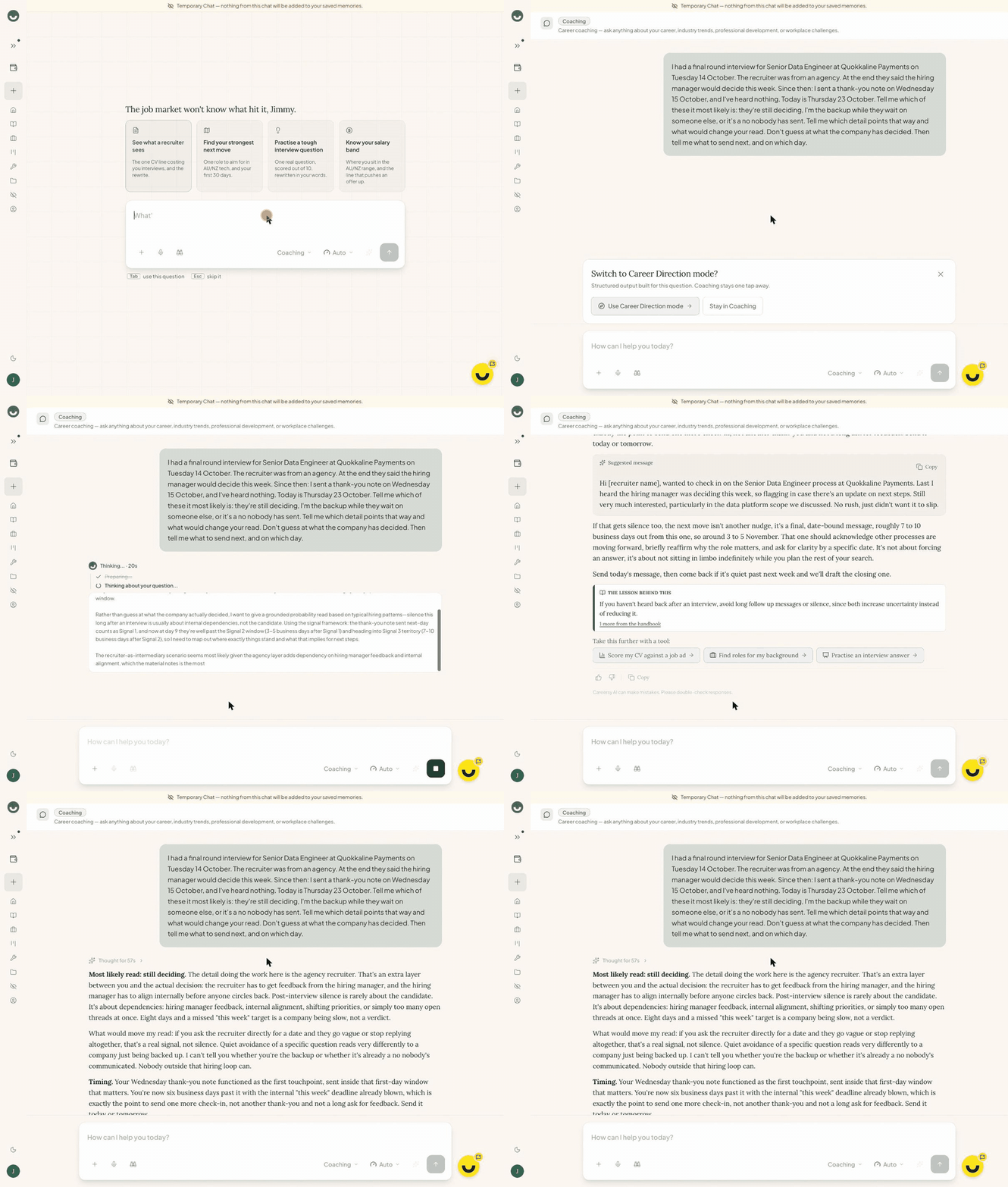 Treat the answer as a read. Nothing outside the company knows what was decided inside it, and a good answer will tell you that.
Before the interview: ask when you'll hear
Agree the follow-up before you need it. Otherwise, as I tell clients, "you're just like a ping-pong." Ask before the interview ends, or when the recruiter books it. Ask when they usually give feedback, then ask if you can follow up if you haven't heard by then. This is how I role-play it with clients:
"If I don't hear back from you in four days, let's say five days, are you okay for me to email you or call you directly?"
Once they say yes, you're not chasing. You're doing what you both agreed. Step 1 of how to prepare for a job interview with AI covers the rest of what to ask before the round. The whole interview stage is mapped on the Australian tech job search guide.
The three signals: what to send, and when
Think of it as three signals, not follow-ups. Each one is short, and each one makes it easy for a busy person to reply.
Signal 1: within 24 hours, a short note with no question
Send a short note the same day or the next. Put three things in it:
- One thing you genuinely enjoyed about the conversation.
- What made you keener on the role.
- One part you've thought about since, or would add to.
Don't ask for anything. Ask the recruiter to pass it on to the panel, so it reaches the people deciding. The recruiter then has two choices: reply with a thank you, or forward it to the panel. As I told a client this month, "An email like that, we never receive."
Write it yourself from those three lines first. Five sentences is plenty. If the words won't come tonight, Careersy AI can draft it from your details, and you can start with 10 free messages on us, no card needed, at app.careersy.ai/signup. Choose Draft Message and paste this in:
Prompt
Draft a short thank-you email to [recruiter's name] after my final round for [role] today. I met [interviewer names and titles]. One thing I enjoyed: [a real moment from the conversation]. What made me keener: [one thing I learned about the role]. One part I'd add to: [where I could have gone deeper, in one line]. Ask them to pass it on to the panel. Keep it under 120 words, in plain words I'd actually use. Don't ask for an update, and don't add anything I haven't told you.
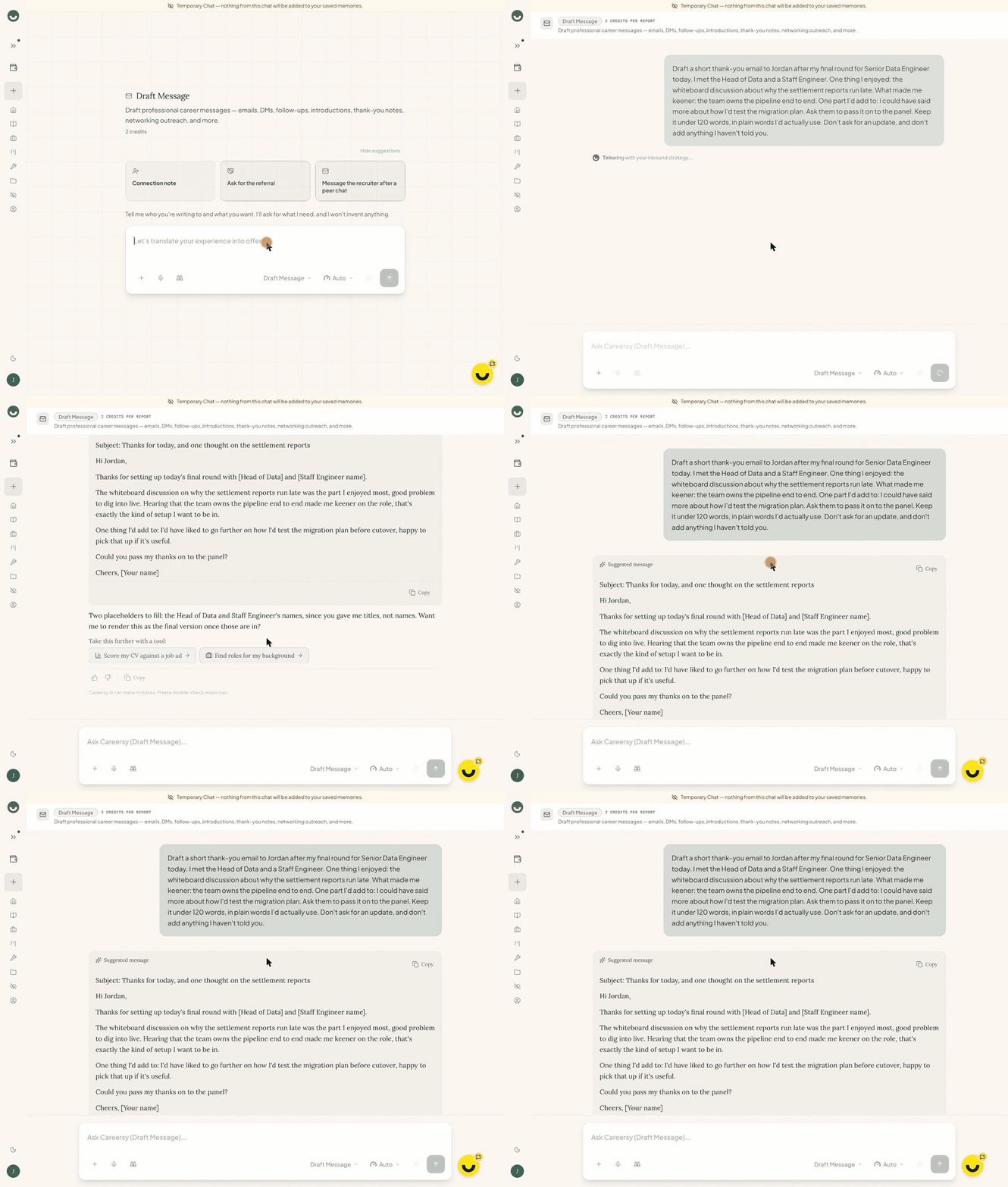 Read it before you send it. Swap any word you wouldn't say out loud.
Signal 2: five to seven business days later, one question
If you haven't heard back, send one or two lines that end on a question they can answer in one sentence. These are the two versions I give clients. Swap in the recruiter's name and the topic you discussed:
"Hi [name], quick check-in following last week's interview. Is the team still in feedback mode, or has a next step been decided?"
"Hi [name], after the interview, I kept thinking about the [topic] we discussed. Happy to clarify anything on that if useful. Is there a next step decided yet?"
Each one is easy to answer with one sentence. It shows you're professional without pushing, and it reminds them why you're relevant without re-selling yourself. So skip "just checking in" and "any updates?"
With an agency recruiter, you can make signal 2 a short call instead. They're paid when the role is filled, so they usually know where it's at, and they'll often tell you on the spot. If you asked at the end of the interview whether you could call, you already have their OK. Keep it under two minutes and ask the same question: is the team still in feedback mode, or has a next step been decided? With an in-house recruiter, stick to the email, because they're often running a lot of roles and a call lands in the middle of their day.
SEEK's template page lists "Please let me know when you will make a decision." as a line to avoid, because "making direct requests comes across as pushy or impatient" (SEEK). SEEK is right about that line, because it asks them to promise a date. Mine asks whether a next step has been decided, which they can answer with a yes or a no.
In the same Draft Message chat, send this:
Prompt
It's been [number] business days with no reply. Draft my second message to [name]. Keep it to one or two lines. Mention [the topic we discussed] once. End on one question they can answer in a sentence, asking whether a next step has been decided. Don't use "just checking in".
Signal 3: seven to ten business days after that, your own deadline
If there's still nothing, send one last message. It does three things:
- It says another process is moving.
- It says, in a line, why this role still matters to you.
- It asks for an answer by a specific day.
This is the wording I give clients. Swap the brackets for your own details:
"Hi [name], I wanted to check back in as I'm now moving into final stages with another process and expect an outcome by early next week. This role is still one I'm very interested in, particularly given the work you mentioned around [the problem they're hiring for]. I wanted to ask whether a decision or next step has been agreed yet, as I'll need to firm up timelines on my side by Friday. Thanks either way, appreciate the context."
If you have the recruiter's mobile, ring once before you send it.
The recruiter takes that message to the hiring manager and says, more or less: this candidate has other interviews, are we going to move or not? Sometimes that gets a frozen role released and moved to an offer. Without it, they have nothing to push with. We have a saying in recruitment: time kills deals.
Only send this if the other process is real. Australia and New Zealand tech is a small market, and an invented offer gets found out.
In Draft Message, send this:
Prompt
Draft my final message to [name]. I'm in final stages with another process and expect an outcome by [day]. I need to firm up timelines by [day]. This role still matters to me because [one reason from the interview]. Ask whether a decision or next step has been agreed. Thank them either way. Keep it under 90 words, and don't name the other company.
Then let it go. After the third signal, every extra message costs you hours and costs them nothing. Move the role to Ghosted and put the hours into the next one.
Keep every live role where you can see it
Don't rebuild your whole CV because one recruiter went silent. Run the sequence, take what you can, and move on. Every silent role you carry in your head takes hours from the next one, so put it somewhere you can see it.
The simplest way is your calendar. On the day of the interview, put in three dates: tomorrow, a week out, and three weeks out. Write each message the night before it's due.
If you're running a few processes at once, that's what Guided Job Hunt in Careersy AI is for. It's where the whole search runs: it finds and scans live roles across LinkedIn and the job boards, and keeps every role you're in moving from Saved to Offer. Open the role's card:
- Set Stage to Interviewing, and Interview stage to Final round.
- Under the interviews section, add the round with its date, and type Pending as the outcome.
- Set Next action to the date your next signal is due.
- In Notes, write who you spoke to, the last contact and what they said. For example:
"Recruiter: [name], agency. Final round 14 Oct. Last contact 15 Oct, thanks sent. Said hiring manager decides this week. Next: signal 2 on 22 Oct."
- After signal 3 with no reply, set Stage to Ghosted.
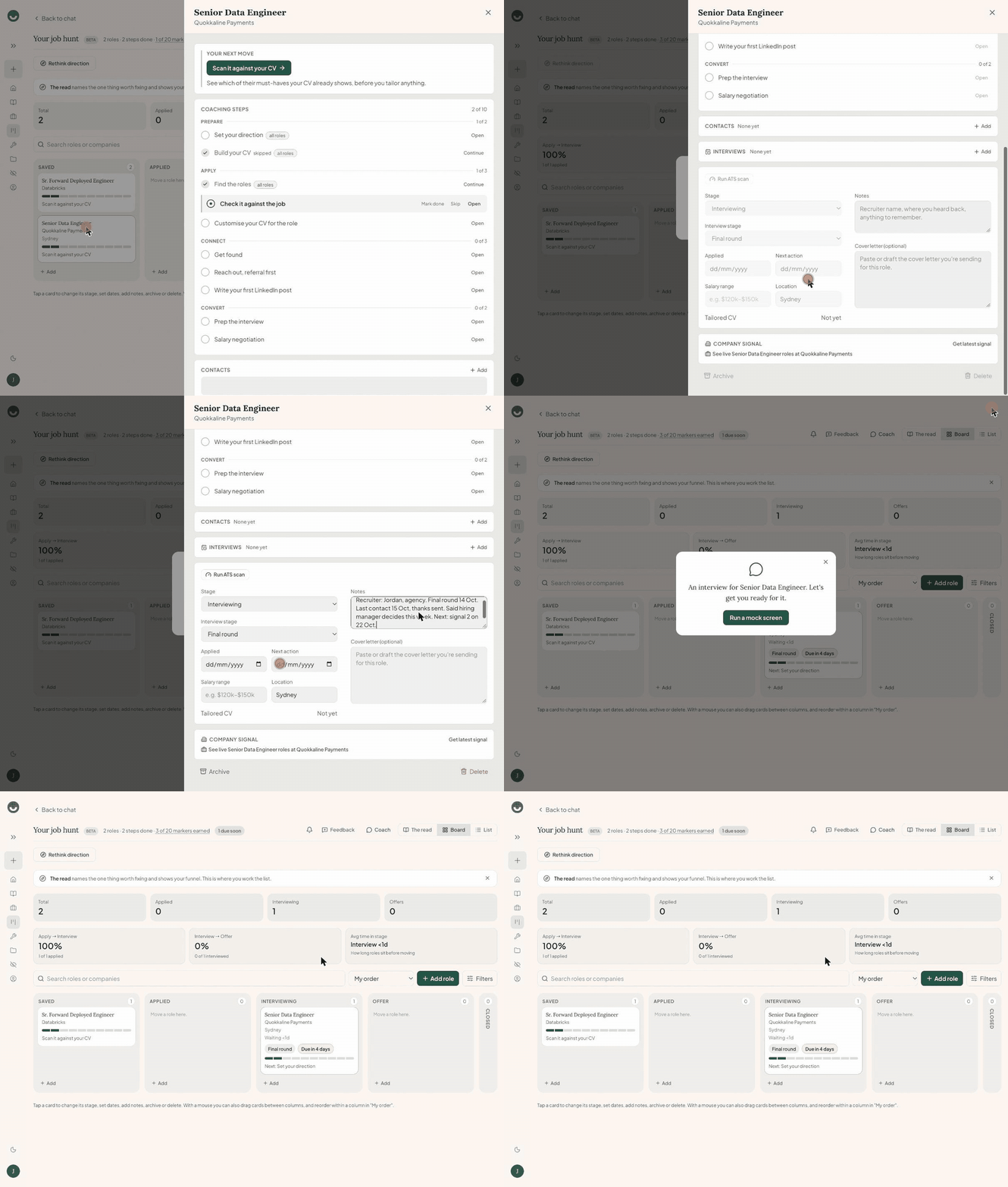 Guided Job Hunt keeps the record, and you still send every message yourself. Nothing goes out without you.
How you know it worked: three messages went out on their dates, and the role is marked on your board, whatever comes back. That part is yours.
What should you never send?
Three messages make replying harder:
- "Just checking in." It asks them to work out what you want.
- A broad "any updates?" It creates work. They have to decide how much to say.
- A long, emotional message. It creates risk. Nobody wants to answer it, so nobody does.
And never claim another offer you don't have.
What can a follow-up change, and what can't it?
A follow-up changes when you hear, and sometimes whether. It can't change a no, an internal candidate who was always going to get it, or a role that lost its budget. What it does do: you've made replying cost them nothing, you've protected your own timeline, and you haven't chased.
From the receiving side, the second email is usually the one that makes me pick up the phone.
If you're the recruiter reading this: two lines when the answer changes is the whole job. The distrust candidates have in recruiters right now is earned.
While you wait, keep preparing
Don't put all your eggs in one basket. That's what the client with the Monday reference check told me afterwards, and it's the right lesson. Keep two or three other processes moving. And get ready for the next step on this one, in case it comes.
In Careersy AI, choose Interview Preparation and send this:
Prompt
I've done the final round for [role]. If they come back, the next step is likely [reference checks / a meeting with the hiring manager's manager / an offer call]. Help me get ready for that step. Ask me the questions most likely to come up, one at a time, and wait for my answer before the next one. Don't invent anything about the company or about me.
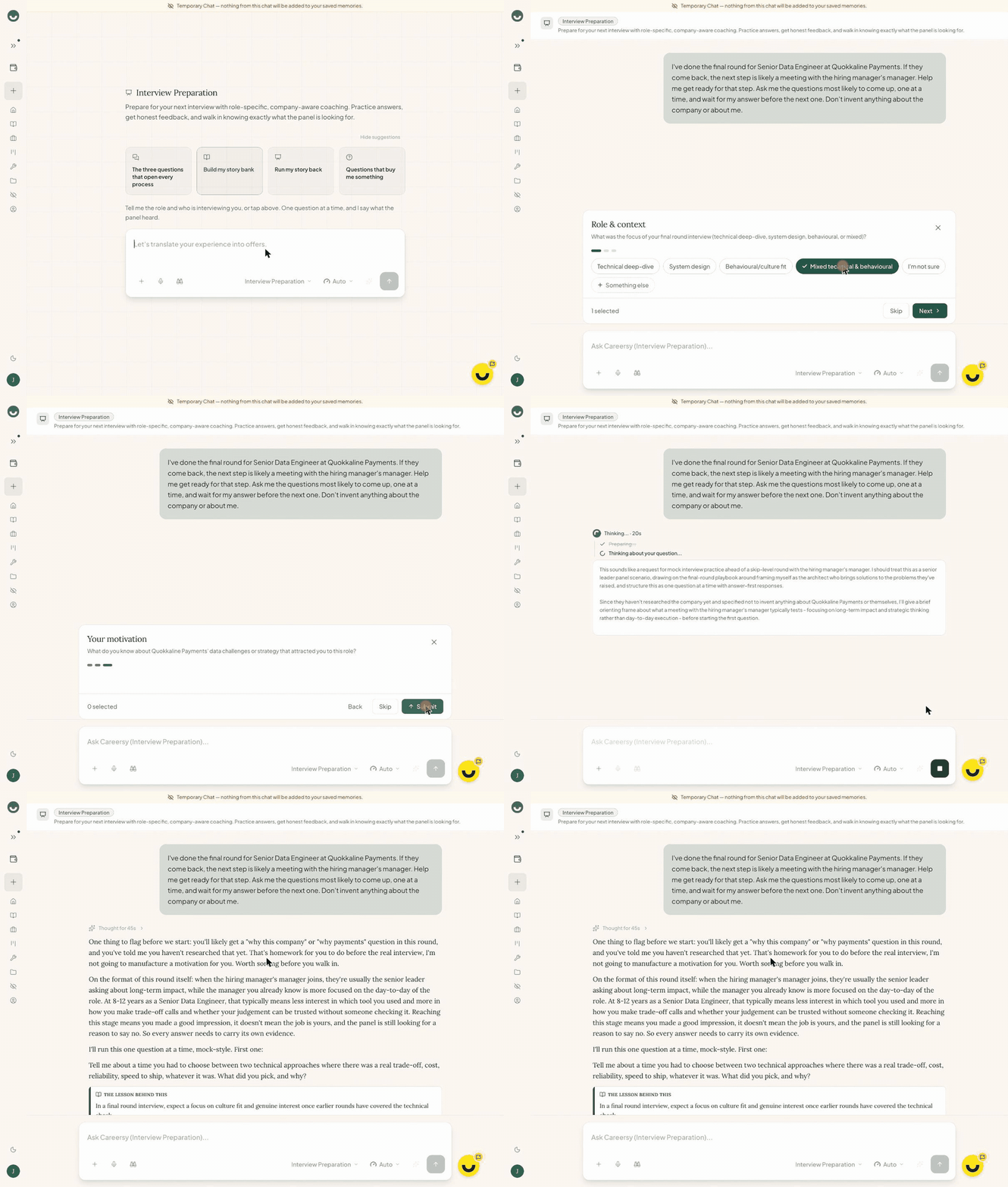 If an offer call comes, how to negotiate a job offer in Australia walks you through it. And if the silence started much earlier, at the application, that's a different problem with a different fix: why your job applications get no response in Australia.
Can you ask for your interview notes in Australia or New Zealand?
Yes, often, but treat it as the last thing you do with that company, once you've stopped hoping for the job. In a market this size, a records request reads as a legal move, so it's not a follow-up step.
- Australia. The privacy regulator says unsuccessful job applicants can generally ask for access to information about them, including information relating to a referee's report (OAIC). Its guidelines say an organisation should reply within 30 calendar days. They can hold back some "evaluative information", such as a score card, though that exception covers only the evaluation, not the personal information a decision was based on (OAIC, APP 12 guidelines). Most businesses with annual turnover of A$3 million or less aren't covered (OAIC).
- New Zealand. The Privacy Commissioner says a job applicant can ask for a copy of any notes made by an interviewer, and can generally see referee comments unless they were given in confidence (Office of the Privacy Commissioner, updated October 2025). The organisation should usually respond within 20 working days (OPC).
So you may get the notes, and you may not get the score. This is general information, not legal advice.
Where this doesn't work
- No recruiter, no contact details. If you only ever dealt with an application portal, there's nobody to send signals to.
- The public sector. Government panels can run longer and on fixed steps. Ask for the timeline at the interview, and follow up against that date instead of these.
- You don't have another process. Then skip the deadline in signal 3. Send one plain question about whether a decision has been agreed, and start another process this week, so next time the deadline is real.
- The recruiter already gave you a date. Wait until the day after it passes, then start at signal 2.
FAQ
How long after a final interview should you hear back in Australia?
After a final round in Australian and New Zealand tech, three to five business days of silence is normal. SEEK tells candidates to expect one to two weeks and to wait five business days before contacting the recruiter. Agency recruiters usually pass news on faster than in-house teams.
Is no news good news after an interview?
No news after an interview usually means the decision isn't made yet. A short silence most often means the hiring manager is still deciding or an approval is pending. If you've followed up twice and heard nothing at all, the honest read is that it's probably a no nobody has sent.
Should I call or email to follow up after an interview?
Email first. Send a short note within 24 hours, then one question five to seven business days later, by email, or by a short call if it's an agency recruiter. If there's still no reply seven to ten business days after that, ring the recruiter's mobile once if you have it. If you have another process, send a final email with your own deadline.
Should I tell the recruiter I have another offer?
Tell the recruiter about another process only if it's real. A real deadline gives the recruiter a reason to push the hiring manager for a decision, and sometimes it gets a frozen role moved to an offer. An invented offer in a market the size of Australia and New Zealand tends to get found out.
Is a reference check a good sign?
A reference check is a good sign. As I put it to a client this year, starting a reference check without "the full intention of hiring you" makes no sense. Some reference checks are informal calls you never hear about, so if the silence comes after references, ask the recruiter whether the decision is waiting on anything they can share.
Can I ask for my interview notes after being ghosted?
In New Zealand, a job applicant can ask for a copy of an interviewer's notes, and the organisation should usually respond within 20 working days. In Australia, unsuccessful applicants can generally ask for information about them, but an organisation can hold back evaluative information like a score card, and most small businesses aren't covered. This is general information, not legal advice.